My Website Gets Traffic But No One Calls or Fills Out a Form Here's How to Fix It
By Creasions | Web Design & Development, Dallas TX
Traffic without conversions is a quiet emergency. Your site is pulling in visitors, your SEO might even be working, but the phone stays silent and the inbox stays empty. If that sounds familiar, the problem almost certainly isn’t your product or service it’s the website itself.
Traffic with zero leads is one of the most common and most fixable problems a business website can have.
In This Guide
Why Traffic Doesn’t Automatically Mean Leads
The 7 Conversion Killers Hidden in Most Business Websites
What a Conversion-Focused Web Design Agency Actually Fixes
How to Choose the Right Web Design Agency for This Problem
The Real Cost of Hiring the Wrong Provider
How Creasions Approaches Websites That Don’t Convert
Questions to Ask Before You Hire Anyone
What to Do Next
Why Traffic Doesn’t Automatically Mean Leads
Most business owners assume that once traffic starts arriving, leads will follow naturally. They don’t. Traffic tells you that people found your website. It says nothing about whether those people trusted what they saw, understood your offer, or felt compelled to act. A website that fails to convert isn’t broken in a technical sense it’s broken at a strategic level, and that distinction matters enormously when you’re deciding what to fix and who should fix it.
The root cause of the traffic-without-leads problem almost always comes down to one of three things: the wrong audience is landing on your site, the right audience is landing but the site fails to communicate value quickly enough, or the site creates friction at the exact moment someone is ready to take action. Each of these requires a different type of intervention, which is why a generic website redesign from a template shop won’t solve the problem the way a purpose-built web design agency focused on conversion outcomes will.
55%
of visitors spend fewer than 15 seconds on a website before leaving
3 sec
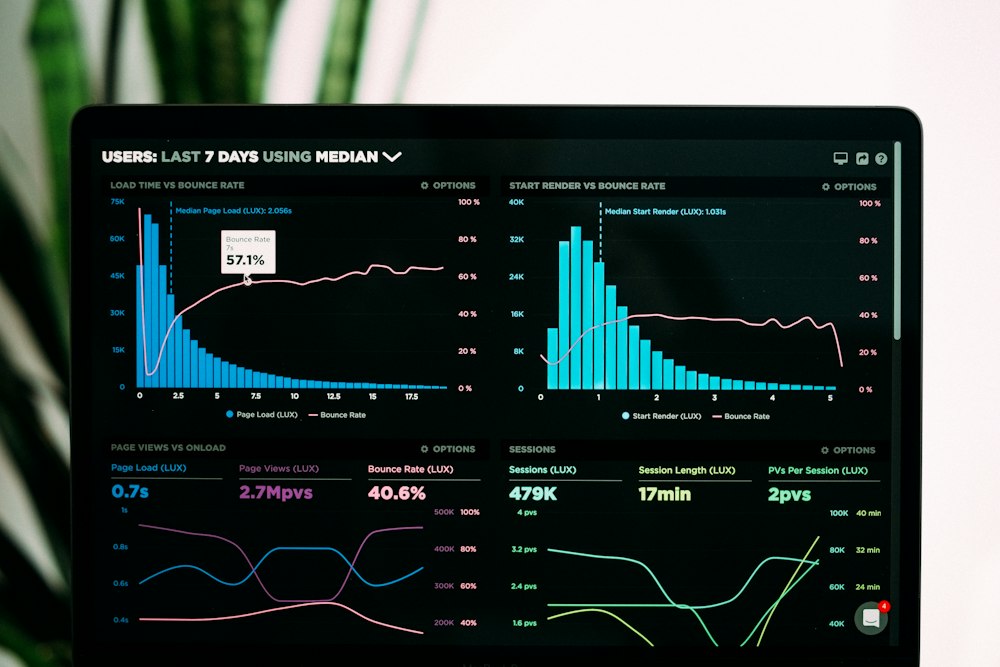
is the load time threshold after which bounce rates spike sharply
80%
of visitors never scroll below the fold on a typical business homepage
200%+
average increase in conversion rates reported after strategic website redesigns
Understanding why traffic doesn’t convert is the first step. The second is knowing exactly which elements of your current site are killing the opportunity and this is where most business owners need outside expertise, because the problems are rarely obvious from the inside.
The 7 Conversion Killers Hidden in Most Business Websites
After auditing hundreds of business websites, experienced conversion-focused web design agencies tend to find the same problems appearing over and over. None of them are unusual. All of them are fixable. Here’s what actually stops visitors from calling or filling out a form.
1. A Headline That Talks About You Instead of the Outcome
The most common homepage mistake in existence: leading with “Welcome to [Company Name]” or “We’ve been serving [City] since 2004.” Visitors don’t care about your history in the first five seconds they care about whether you can solve their problem. A strong homepage headline should immediately answer the visitor’s unspoken question: “Is this place for someone like me, and can they help?” If your headline doesn’t answer that, a significant percentage of your traffic exits without ever reading further.
2. No Clear, Dominant Call to Action
Many business websites scatter multiple CTAs across a page “Learn More,” “View Our Portfolio,” “Contact Us,” “Get a Free Quote,” “Subscribe to Our Newsletter” all competing for attention at equal visual weight. When everything is a priority, nothing is a priority. Effective website redesign services establish a single dominant conversion action per page and design the entire visual hierarchy around guiding the visitor toward that one action. Secondary options exist, but they never compete with the primary conversion path.
3. Slow Load Times That Bleed Visitors Before They See Anything
Page speed is not a technical nicety it’s a conversion variable. Every additional second of load time reduces the probability that a visitor stays on the page. For mobile users, especially those on slower connections, a site that takes four or five seconds to load will see a majority of visitors bounce before the page fully renders. This means traffic that looks healthy in analytics is actually hemorrhaging potential leads before they ever see your offer. A qualified web design agency for small businesses treats performance optimization as a fundamental deliverable, not an optional add-on.
4. Weak or Missing Social Proof
A business website without visible trust signals, testimonials, case studies, client logos, review counts, industry certifications asks visitors to take a leap of faith that most won’t take. When someone is considering calling or submitting a form, they’re making a micro-decision about whether to trust you with their time and potentially their money. Social proof at exactly the right moments in the page layout (near CTAs, near pricing, near contact forms) dramatically reduces this friction. Most underperforming websites either omit social proof entirely or bury it on a separate “Testimonials” page nobody visits.
5. A Contact Form That Feels Like an Interrogation
Ask someone for their name, email, phone number, company name, budget range, project timeline, how they found you, and a detailed description of their project and watch your form submissions collapse. The more fields a form has, the lower the completion rate, with rare exceptions. For most service businesses, a first-contact form should capture three things at most: name, email or phone, and a brief note about what they need. A good website redesign audit will always review form architecture as a conversion lever, not just a design element.
6. Mobile Experience That Doesn’t Match Desktop Intent
The majority of business website traffic now arrives via mobile devices. But many business sites were built primarily for desktop and adapted for mobile as an afterthought. Buttons that are too small to tap, text that requires zooming, forms that are difficult to complete on a touchscreen, and navigation menus that obscure content, all of these create abandonment on mobile that never shows up as a clear “why” in your analytics. A mobile-first approach to web development isn’t a trend; it’s a baseline requirement for any site that wants to convert traffic into inquiries.
7. Messaging That Serves Everyone and Speaks to No One
Broad, generic messaging, “We provide quality services at competitive prices” sounds like every other business in your category. It gives visitors no reason to prefer you over anyone else, and it certainly doesn’t compel action. The most effective business websites speak directly to a specific type of customer, their specific pain, and the specific outcome the business delivers. Specificity creates resonance. Resonance creates trust. Trust creates conversions. If your site’s copy could apply to any business in your industry, it’s working against you.
Common Mistake to Avoid
Many businesses respond to the traffic-no leads problem by investing more in ads or SEO pouring more traffic into a site that isn’t converting. This compounds the problem. More traffic through a broken funnel means more wasted ad spend. The conversion problem must be addressed first.
What a Conversion-Focused Web Design Agency Actually Fixes
There’s a meaningful difference between a web design agency that builds visually attractive websites and one that builds websites specifically engineered to convert visitors into leads and clients. Understanding this distinction helps you ask the right questions before hiring anyone.
A conversion-focused web development agency starts with your business goals, not your aesthetic preferences. They want to know: What does a converted visitor do? Call, email, book, buy? Where are people currently dropping off? What objections does your sales process face? What do your best customers have in common? The design and development that follows is built backward from those answers not forward from a template or a style preference.
Conversion-focused web design begins with strategy mapping the customer journey before a single pixel is placed.
Specifically, a strong web design agency focused on conversions will typically address:
Conversion rate audit of existing pages, identifying exact drop-off points
User journey mapping to understand what visitors need to see and when
Messaging and positioning review to ensure copy speaks to buyer intent
CTA architecture, placement, hierarchy, copy, and visual treatment
Page speed optimization for both desktop and mobile
Trust signal integration at high-friction moments in the user journey
Contact and inquiry form simplification and placement testing
Mobile experience audit and rebuild where necessary
Analytics and tracking setup to measure conversion outcomes precisely
Ongoing performance monitoring post-launch to capture further gains
The outcome of this process is a website that functions as an active business asset not a digital brochure. The difference in lead generation between a brochure site and a conversion-optimized site, for the same volume of incoming traffic, is often three to five times or more. This is why many businesses who finally hire the right web design agency for small businesses report that their website becomes their best-performing marketing channel almost immediately after launch.
How to Choose the Right Web Design Agency for This Problem
Not all web design agencies are built for the same type of work. Choosing the wrong one for a conversion problem is a common and costly mistake. Here’s how to evaluate your options with the specific goal of fixing a site that gets traffic but doesn’t generate leads.
Look for Agencies That Talk in Business Outcomes, Not Design Awards
An agency that leads with how beautiful their portfolio looks is solving a different problem than you have. You need an agency that asks about your lead generation goals, your current conversion rate, your sales cycle, and your target customer before they show you a single design concept. If an agency’s discovery process doesn’t include these questions, they’re likely to build you a more attractive version of your existing problem.
Ask for Case Studies With Measurable Results
Any serious website redesign agency should be able to show you examples where their work produced measurable outcomes, more inquiries, lower bounce rates, higher time-on-site, increased form submissions. Vague claims about “improving the user experience” aren’t enough. Ask for specific numbers. Ask what the conversion rate was before the redesign and what it was six months after. If they can’t answer, keep looking.
Verify Their Process Includes Strategy Before Design
The fastest route to a website that still doesn’t convert is an agency that skips strategy and jumps straight to design. Strategy means researching your market, understanding your customer’s decision journey, mapping content to conversion intent, and validating assumptions before committing to a design direction. Agencies that skip this step are faster and cheaper, but they’re also building on guesswork.
Confirm They Handle Performance and SEO as Standard Practice
A beautiful, conversion-optimized site that loads slowly or doesn’t get found by search engines is only solving part of the problem. The best web design and development agencies build performance and on-page SEO into their standard workflow not as separate services you have to request and pay extra for.
What to Look For
Red Flag
Green Flag
Discovery process
Asks only about design preferences and visual inspiration
Asks about business goals, target audience, current conversion data
Portfolio evidence
Showcases beautiful designs with no performance data
Shows before/after results with specific conversion or traffic metrics
Proposal focus
Leads with page count, design revisions, and visual deliverables
Leads with strategy, user journey, and conversion architecture
Technical scope
Treats performance and mobile optimization as optional upgrades
Includes page speed, mobile UX, and Core Web Vitals as standard scope
Post-launch plan
Hands over the site and considers the project done
Monitors performance and refines based on real user behavior
The Real Cost of Hiring the Wrong Provider
This is the part of the decision that doesn’t get discussed enough. Hiring the wrong web design agency doesn’t just mean you spent money and got a mediocre website. It means you’ve now spent money, invested time in the project, delayed your actual fix by six months or more, and still don’t have a website that generates leads. The opportunity cost of that delay the leads that didn’t come in, the revenue that didn’t close often dwarfs the cost of the project itself.
There’s also a more insidious risk: a website that looks newer and more polished but still doesn’t convert. When a business spends on a redesign and the leads still don’t come, it’s tempting to conclude that “the website isn’t the problem” and look elsewhere. In reality, the problem is that the redesign addressed aesthetics but not conversion strategy and now the business is less likely to make the right investment because they feel they’ve already tried it.
The most expensive website is the one that looks professional but sends no leads. It costs you the price of the design plus every lead you didn’t get while it was live.
Common warning signs that a provider is likely to deliver this outcome include: pricing that seems unusually low for the scope of work, no discovery or strategy phase in their process, reliance on pre-built templates without customization to your conversion goals, and an inability to explain how they measure success beyond “it will look great.”
How Creasions Approaches Websites That Don’t Convert
Creasions is a digital agency built specifically around the problem you’re dealing with: websites that get traffic but fail to generate leads. The agency’s core focus is web design and web development for small and mid-sized businesses not brand identity campaigns, not social media management, not broad-scope digital marketing retainers. Web performance is the primary discipline, and conversion is the primary metric.
Every Creasions project begins with data understanding where visitors go, where they drop off, and why.
The agency’s approach starts with a structured audit of the existing site before any design conversation happens. This means looking at where traffic is coming from, where visitors are dropping off, what the current call-to-action structure looks like, how the site performs on mobile, and what the messaging communicates to someone seeing it for the first time. This audit phase produces a clear picture of why the site isn’t converting and a roadmap for what needs to change.
From there, Creasions builds or rebuilds the website with conversion architecture as the foundation not as a layer applied on top of the design after the fact. This means the user journey, the CTA hierarchy, the trust signal placement, the form structure, and the page speed targets are all defined before a design direction is chosen. The visual work follows the strategic framework, not the other way around.
Because the agency works primarily with small and mid-sized businesses, their website redesign services are scoped and priced to deliver genuine business impact without the overhead of a large agency engagement. Clients get strategic depth with delivery accountability and they can see measurable results within the first 60 to 90 days after launch.
What Makes Creasions Different
Most web design agencies optimize for aesthetics. Creasions optimizes for outcomes specifically, for turning website visitors into calls, form submissions, and paying clients. Every design decision is evaluated against that standard before it’s implemented.
Questions to Ask Before You Hire Anyone
Whether you’re talking to Creasions or evaluating other web design agencies, these questions will quickly reveal whether a provider is equipped to solve the specific problem of traffic without conversions. Use them in your first conversation with any agency you’re considering.
What’s your process for understanding why a site isn’t converting before you start designing?
If they don’t have a structured audit or discovery process, they’re guessing.
Can you show me a project where you improved conversion rates, with specific before-and-after numbers?
Results they can’t quantify are results that probably weren’t tracked.
How do you handle page speed and mobile performance, is that part of your standard scope?
These should be non-negotiable deliverables, not add-ons.
What happens if the site still isn’t converting after launch, what’s your process for diagnosing and iterating?
A responsible agency has an answer to this question; a transactional one doesn’t.
How do you set up conversion tracking, and what metrics will we be reporting on together?
You should be able to measure the impact of the investment with real data.
What does the ongoing relationship look like post-launch?
A one-and-done handoff is often a sign that the agency’s interest ends when the invoice is paid.
These questions aren’t meant to be confrontational, they’re meant to help you separate agencies that understand conversion from those that understand design. Both produce websites. Only one produces leads.
What to Do Next
If your website is getting traffic and producing no leads, the good news is that this is a solved problem, businesses face it constantly, and the right web design agency can fix it with a structured, evidence-based approach. The bad news is that every week the site stays as-is is another week of wasted traffic and missed revenue.
The first practical step is to get an honest assessment of what’s actually causing the conversion failure. Not a guess, not a template redesign, not more traffic, a diagnostic look at your current site’s structure, messaging, performance, and user experience against the specific intent of the visitors who are already arriving. That assessment shapes everything that comes after.
If you’re ready to turn your website into a lead generation asset instead of a digital brochure, Creasions offers a no-obligation website consultation where they review your site, identify the specific conversion gaps, and outline what a fix would actually look like for your business. There’s no pitch, no pressure, just a clear-eyed look at what’s happening and what it would take to make it work.
Frequently Asked Questions
What does a web design agency actually do differently from a freelancer?
A web design agency typically brings a team with distinct specializations, strategy, UX design, front-end development, performance optimization, and often SEO that a solo freelancer can’t match in depth. For a conversion problem specifically, the strategic layer is what makes the difference: an agency can audit your current site, map your customer journey, and build to a performance standard that a generalist freelancer may not be equipped to deliver.
How long does a website redesign take?
For a small to mid-sized business website with five to fifteen pages, a well-scoped website redesign typically takes six to twelve weeks from kickoff to launch, depending on the complexity of the site, the responsiveness of content approvals, and whether custom functionality is required. Rushed timelines often compromise the strategy phase, which is precisely the phase that determines whether the new site actually converts.
How much does a conversion-focused website redesign cost?
Pricing varies considerably based on scope, but for a web design agency for small businesses focused on conversion outcomes rather than template builds, a serious redesign engagement typically starts in the range of a few thousand dollars and scales up with complexity, custom features, and ongoing support. The more useful question is what a lead is worth to your business and how many leads per month the investment needs to produce to justify itself, which is a calculation a good agency will help you make before you commit.
Should I fix my existing website or build a new one?
The honest answer depends on the current site’s technical foundation, the scope of the conversion problems, and the age of the platform it’s built on. Some sites need structural rebuilds because the underlying architecture is too limited to support the changes required. Others can be significantly improved through targeted conversion optimizations without a full rebuild. A proper audit answers this question, it shouldn’t be assumed either way before someone has looked carefully at the existing site.
Can good web design really make that much of a difference to leads?
Yes and the evidence is consistent across industries. The gap between a well-optimized, conversion-focused site and a generic brochure site, measured in lead volume for the same traffic, is often three to ten times. This isn’t about aesthetics; it’s about whether the site systematically guides qualified visitors toward taking action. Most underperforming business websites aren’t failing because of a design style, they’re failing because nobody designed the conversion path at all.
Recents
Do I Really Need a Website, or Is Social Media Enough?



 Conversion-focused web design begins with strategy mapping the customer journey before a single pixel is placed.