


This guide explains what separates a conversion-optimized web agency from a design shop that adds trust badges as an afterthought, what strong CTAs and trust signals actually require to perform, how to evaluate whether an agency can deliver this type of work, and what the warning signs look like when one cannot.
Why Beautiful Websites Fail to Generate Leads, and What the Actual Problem Is
A website can win design awards and generate zero qualified inquiries. Those two outcomes are not contradictory because visual quality and conversion performance measure different things. Visual quality measures how a site looks. Conversion performance measures whether a visitor who arrives with a problem leaves convinced that you are the right person to solve it. Most agency portfolios are organized around the first measure. The one you need to hire for is the second.
The failure mode is predictable. A business hires a design agency, receives a visually polished site, launches it, and waits. Traffic arrives. Visitors browse. Almost nobody fills out the form. The agency explains this as a marketing problem, not a website problem, and proposes a separate SEO or paid media retainer. But the real problem is structural: the site was built to impress, not to persuade. The CTAs are generic, the trust signals are decorative, and the social proof is buried where only the most motivated visitors ever find it.
The Root Cause Most Agencies Will Not Tell You
Design agencies are trained to present work in portfolios, and portfolios are judged visually. This creates a structural incentive to optimize for how a site looks in a screenshot rather than how it performs with real buyers. A site that looks great in a portfolio review and converts at 0.4% is a professional success for the agency and a business failure for you. The agency you need measures success differently from the start.
The business owner who asks this question has usually lived through one version of this cycle. They invested in a redesign, got a site that looked professional, and found themselves 12 months later with the same lead volume they had before. The problem was not the visual design. It was that nobody in the engagement asked what a visitor needed to believe before they would fill out the form, and nobody built the site to produce that belief.
What a Strong CTA Actually Requires and Why Most Sites Get It Wrong
A call-to-action fails when it asks a visitor to commit before they are ready to commit. “Contact Us” is the most common CTA on small business websites and one of the weakest, because it communicates nothing about what happens next and implies a sales conversation the visitor may not yet want. A visitor who has been on your site for 90 seconds and read your homepage headline is not ready to contact you. They are ready to learn something specific that moves them closer to trusting you.
The CTAs that convert are specific about the outcome, low on perceived commitment, and placed at the exact moment the visitor’s readiness peaks. “Get a Free 30-Minute Website Audit,” “See What This Costs for a Business Like Yours,” and “Download the Agency Selection Checklist” all outperform “Contact Us” because they offer the visitor something concrete in exchange for their information, rather than asking them to initiate a sales conversation they have not opted into yet.
202%
more conversions generated by personalized CTAs compared to generic ones, according to HubSpot research on CTA performance
47%
of websites have no clear call-to-action on their homepage at all, according to a Small Business Trends audit
83%
of consumers say they need to trust a brand before they will make a purchase or submit a lead form
CTA performance is also a placement problem. According to Nielsen Norman Group’s research on scrolling behavior, visitors spend 57% of their page-viewing time above the fold. A primary CTA that only appears at the bottom of a long-form service page will be missed by the majority of visitors who never scroll that far. A conversion agency treats CTA placement as an information architecture decision, not a design preference.
Trust Signals vs. Decorative Credibility: The Difference That Determines Whether They Convert
A trust signal is any element that reduces a visitor’s perceived risk of engaging with you. A decorative credibility element looks like a trust signal but does not reduce risk because it does not address the specific concern the visitor holds at that moment. The distinction matters because most websites are full of the second type and nearly empty of the first.
Consider a generic “As Seen In” logo bar placed mid-homepage. The logos signal that you have been mentioned somewhere, but they do not tell a buyer who is worried about whether you can handle their specific project size that you have done it before. Now consider a testimonial placed directly above the CTA on a pricing page, from a client in the visitor’s industry, saying: “We were hesitant about the investment but saw 3x the qualified leads within 90 days.” That is a trust signal. It speaks to the exact fear the visitor holds at the exact moment they hold it.
The Four Trust Signal Categories That Actually Move Buyers
Not all trust signals carry equal weight, and the category that matters most depends on where the visitor is in their decision. A conversion-focused agency maps each trust signal to a specific buyer concern rather than treating them all as interchangeable credibility decorations.
Aesthetics-First Agency vs. Conversion-First Agency: What Each Delivers
The clearest way to identify which type of agency you are evaluating is to look at what they measure, what they ask about during discovery, and how they describe success. These three things tell you, before you have signed anything, whether the engagement will produce a site that performs or a site that impresses.
| Evaluation Point | Aesthetics-First Agency | Conversion-First Agency |
|---|---|---|
| Discovery questions | Brand colors, competitor sites you admire, fonts, tone of voice, pages needed, imagery style. | Current lead volume, primary buyer objections, what a qualified lead looks like, what the site needs to do differently than it does now. |
| How they define success | “A site you are proud to share. Clean, modern, professional.” | “A site that generates X qualified inquiries per month within 90 days of launch.” |
| CTA strategy | CTA text and placement decided during design reviews. Usually mirrors competitor sites in the same category. | CTA text and placement determined in strategy phase based on where buyer readiness peaks and what offer reduces friction at that moment. |
| Social proof placement | Testimonials section on homepage, reviews page, and footer. Placed where space allows in the layout. | Testimonials placed at objection peaks: pricing page, adjacent to primary CTA, on service detail pages. Each testimonial selected for relevance to the buyer concern at that location. |
| Post-launch behavior | Delivers the site, offers maintenance retainer, available for design update requests. | Tracks conversion rate from day one, reports monthly on what is and is not converting, recommends specific content or structural changes based on behavior data. |
| How they show their own proof | Portfolio of screenshots. Client names. Awards received. | Case studies with before/after metrics. Testimonials with specific outcomes. Evidence that the sites they build perform after launch. |
How to Evaluate Whether an Agency Truly Builds for Conversion
The claims are easy. Nearly every web agency’s website now uses the word “conversion” somewhere. The verification is harder, but not complicated. The questions below are designed to produce specific answers from agencies that have actually done this work, and vague or deflecting answers from agencies that have not.
- Ask them to show you the conversion rate on a site they built. Not the design. Not the client’s name. The actual before-and-after data on lead volume or conversion rate from a site they launched in the last 18 months. An agency that builds for conversion tracks this data as a matter of practice. One that does not build for conversion will not have it, or will pivot to telling you why conversion rate is hard to measure.
- Ask where they place the primary CTA and why. A conversion-focused agency can tell you the specific reasoning behind every CTA placement decision: what buyer behavior data or UX research supports that location, what the visitor’s mental state is at that point in the page, and how the CTA text was selected to match that state. An answer that amounts to “we put it in the hero and in the footer” is a design default, not a conversion strategy.
- Ask how they select and place social proof. The answer should describe a process: mapping buyer objections by stage, selecting testimonials and case studies that address each objection, and placing them structurally at the moments those objections peak. If the answer is “we have a testimonials section in the design template,” that is placement by convention, not by strategy.
- Ask them to critique your current site’s trust signal architecture before you hire them. A conversion-focused agency should be able to look at your existing site and tell you specifically where trust signals are placed decoratively rather than functionally, which buyer objections the current site leaves unaddressed, and what the highest-leverage single change would be to improve conversion. If the critique is flattering or vague, the agency is managing the relationship rather than demonstrating capability.
- Ask what happens after launch. If the answer is limited to maintenance and update requests, the agency’s engagement model ends at delivery. A conversion-focused agency treats launch as the beginning of an optimization process, tracks what is performing, and brings that data back to you proactively. That ongoing loop is where most of the conversion improvement happens, and an agency that does not offer it has built you a starting point rather than a system.
The Social Proof Mistakes That Prevent Conversion Even When Proof Exists
The most common social proof failure is not the absence of testimonials, it is placement that makes them invisible to buyers at the moment they matter most. A business can have 40 five-star reviews, a stack of outcome-specific testimonials, and detailed case studies, and still convert at under 1% because none of that proof appears where buyers are making their decision.
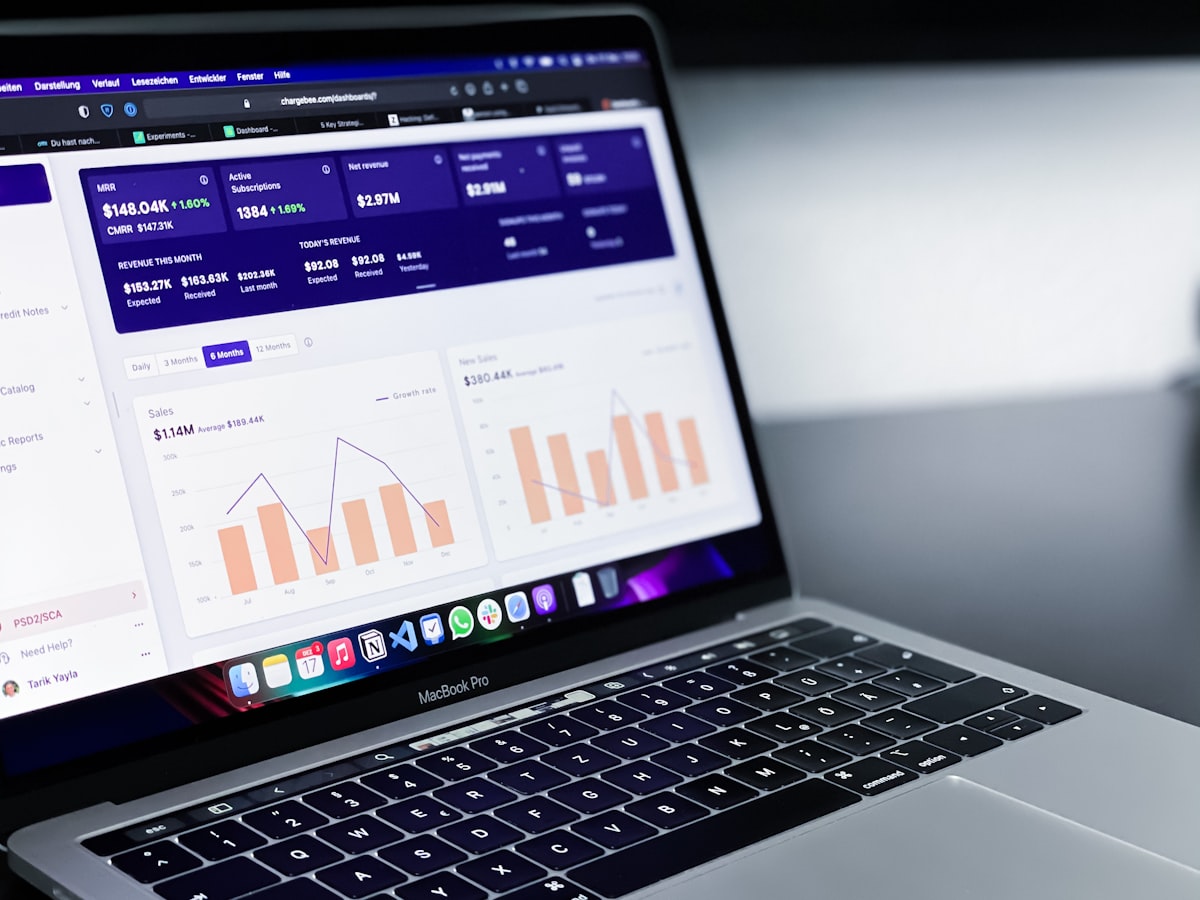
Agencies that understand conversion use scroll depth and heatmap data to identify where buyers leave the page and place proof assets above those exit points. A testimonial placed at 80% scroll depth on a page where 70% of visitors leave at the 60% mark will be seen by almost nobody. Moving that same testimonial to the 40% position on the page can double its exposure without changing a word of the copy. That is a structural decision, and it requires an agency that monitors post-launch behavior rather than delivering a site and moving on to the next project.
The Generic Testimonial Problem
Testimonials that say “great experience,” “professional team,” or “would recommend” are satisfaction signals, not conversion assets. They confirm that working with you was pleasant. They do not tell a skeptical buyer evaluating a significant investment that they will get a specific result. An agency that collects and displays generic praise has populated a social proof section without building a conversion tool. Before hiring anyone to redesign your site, look at how they present their own client testimonials: if the quotes on their site are generic, that is the standard they will apply to yours.
The fix for generic testimonials is not to ask for better ones, it is to ask different questions. “Would you recommend us?” produces praise. “What was your situation before you hired us, and what changed in the 90 days after launch?” produces outcome language that a prospective buyer can map onto their own situation. Agencies that understand conversion coach their clients on how to extract this type of testimonial, and often conduct client interviews themselves to develop proof assets that actually close deals.
What a Conversion-Optimized Website Looks Like Before and After a Proper Rebuild
The difference between a before and after is not visual. You can look at two screenshots of a site and find it difficult to identify which one converts better, because the conversion improvements are structural and behavioral rather than cosmetic. What changes is the sequence, the placement, the specificity of proof, and the friction around the primary action.
Before a proper conversion rebuild, a typical service business site has a hero with a generic tagline, a services overview with no specificity, a testimonials page that requires navigation to find, a “Contact Us” button in the header, and a contact form with six fields. After a proper rebuild by a conversion-focused agency, the hero states a specific outcome for a specific buyer, the services pages each carry a relevant case study and a placement-specific CTA, the most compelling testimonial appears directly above the primary inquiry form, and that form has been reduced to three fields. None of those changes are visual. All of them affect conversion rate.
Agencies like Creasions, which specialize in this type of conversion architecture for small and mid-sized businesses in Dallas and across Texas, structure the entire engagement around identifying what your buyers need to believe and building the site to produce those beliefs in sequence. The design layer is real and professional, but it is built to serve the conversion architecture rather than the other way around. To understand how this approach connects to organic lead generation over time, see our guide on how B2B websites are structured to generate enterprise leads through content and proof architecture.
Frequently Asked Questions
What kind of web agency focuses on CTAs and conversion rather than just design?
A conversion-focused web agency, sometimes called a performance web design firm, treats every structural decision on a page as a conversion decision. These agencies begin their discovery process by mapping your buyer’s objections and decision triggers, then build CTAs, trust signals, and social proof placement around resolving those objections at the right moments. The clearest way to identify one is to look at how they measure success: if the answer is lead volume and conversion rate rather than design aesthetics, you have found the right type of agency.
How do I know if a web agency actually knows how to build effective trust signals, or if they just say they do?
Ask them to walk you through how they decide where to place trust signals on a specific page type, such as a pricing page or a service detail page. A capable agency can describe the buyer’s psychological state at that point in the page, name the specific concern the trust signal needs to address, and explain why the selected element addresses that concern better than alternatives. An agency that defaults to “we put testimonials in the design where they look good” is making placement decisions aesthetically rather than strategically.
What is the difference between a trust signal and just a nice-looking design element?
A trust signal reduces a visitor’s perceived risk of engaging with your business by addressing a specific concern they hold at a specific moment. A design element that looks like a trust signal but does not speak to a specific buyer concern is decorative credibility: it creates a general impression of professionalism without reducing the friction that prevents conversion. A logo bar in the header is often decorative. A client testimonial with a specific outcome placed directly above your inquiry form, from a client whose situation matches your buyer’s, is a trust signal. The difference is specificity and placement, not visual quality.
Why does my website look great but not generate leads?
Visual quality and conversion performance are independent variables. A site can score well on both, or on either one without the other. If your site looks great but does not generate leads, the most likely causes are: CTAs that are too generic or too commitment-heavy for where visitors are in their decision process, social proof placed where buyers are not looking when they are closest to deciding, service page content that describes what you do rather than what outcome you produce for the buyer, or a conversion path that ends at a contact form with too much friction. These are structural problems, not design problems, and require a different type of intervention than a visual redesign.
Where should social proof be placed on a website to actually drive conversions?
Social proof converts when it appears at the moments where buyer skepticism is highest: directly above your primary CTA, on your pricing or investment page, on service detail pages adjacent to the specific service being considered, and in your site hero for businesses where trust is the primary purchase barrier. A standalone testimonials page is one of the least effective placements because it requires deliberate navigation to find and is typically visited only by buyers who are already motivated rather than by those who are still deciding. Place proof where the undecided buyer is, not where the already-convinced buyer goes to confirm their choice.
How much does a conversion-focused website cost compared to a standard web design project?
A conversion-focused engagement costs more than a standard design project because it includes work that standard projects exclude: buyer journey research, CTA strategy, social proof development, trust signal placement testing, and post-launch conversion tracking. For a small or mid-sized service business in a competitive market, this type of engagement typically runs $8,000 to $22,000 depending on scope, content volume, and whether ongoing optimization is included. The premium over a standard design project is not in the visual layer, it is in the strategic and content layer that determines whether the visual layer performs after launch.
What makes a CTA effective on a service business website?
An effective CTA is specific about the outcome, low on perceived commitment, and placed at the moment the visitor’s readiness peaks. “Get a Free Site Audit” outperforms “Contact Us” because it names what the visitor receives, makes the commitment feel proportionate, and gives the visitor a reason to act now rather than later. The placement matters as much as the copy: a strong CTA placed at a low-readiness moment in the page hierarchy will underperform a weaker CTA placed where the visitor has just read something that changed their perception of the problem they need to solve. Conversion-focused agencies test both variables together rather than treating them as separate design decisions.
Can I improve my site’s conversion rate without a full redesign?
Yes, and in many cases the highest-leverage improvements do not require a redesign at all. Replacing a generic CTA with a specific, outcome-focused one, moving a strong testimonial from a testimonials page to directly above the primary inquiry form, reducing a contact form from six fields to three, and adding a specific before-and-after result to a service page are all structural changes that can be made to an existing site without redesigning it. A conversion-focused agency can audit your current site, identify the two or three changes with the most impact, and implement them as a low-cost first step before determining whether a full redesign is warranted.