I Want My Website to Rank on Google Through Content, Not Just Ads, Which Agency Builds Sites Architected for SEO and Blogging From the Start?
By Creasions | Web Design & Development, Dallas TX
The agency you need is one that treats SEO as an architectural decision, not a post-launch add-on. Most web agencies build a website and then suggest you hire an SEO consultant afterward. The right agency designs your URL structure, content hierarchy, internal linking system, and blog architecture before a single page goes live. When SEO is embedded into the build from day one, your site starts accumulating search authority immediately. When it is bolted on later, you spend the first six months correcting structural mistakes that a better-built site would never have had.
Organic rankings compound over time. But only if your site was built with the structural SEO foundations that let Google understand, index, and rank your content correctly from launch day.
This guide is for business owners who are done paying for ads that stop working the moment they stop spending. You want a site that earns organic traffic through useful content and smart structure. This guide shows you what that actually requires from a web agency, what to look for, and what to avoid.
Why Most Websites Are Not Built to Rank Organically
Organic search is the most sustainable marketing channel a business can build. According to BrightEdge’s channel share research, organic search drives 53% of all website traffic across industries, outperforming paid search, social media, and direct traffic combined. But capturing that traffic requires more than publishing blog posts. Your site’s technical foundation, its architecture, has to be built correctly first.
The problem is that most agencies build websites for aesthetics and leave SEO to someone else. They design a clean homepage, write placeholder copy, and hand the site over at launch. Then they tell you to “add content over time.” This approach treats SEO as a marketing activity rather than a structural requirement.
It is like building a house on sand and then hiring someone to decorate it. The decoration is fine. But the foundation is wrong, and the problems compound.
A website built without SEO architecture from the start has the wrong URL structure, thin service pages, no internal linking logic, and a blog that exists as a disconnected section rather than a content engine feeding authority across the whole site. No amount of post-launch SEO work fully fixes these structural problems without a rebuild.
53%
of all website traffic comes from organic search, more than paid, social, and direct combined
14.6%
close rate for SEO leads, compared to 1.7% for outbound leads like cold calls and print ads
6×
higher conversion rates for businesses that blog consistently versus those that do not, per HubSpot’s marketing data
3 to 6 mo
time typically required to correct structural SEO mistakes from a site that was not built with proper architecture
What “SEO-Architected From the Start” Actually Means
SEO architecture is not the same as on-page SEO. On-page SEO is adding a keyword to a title tag. Architecture is how the site is structurally built so that Google can crawl it efficiently, understand its topical focus, and assign authority across its pages through internal links and content depth.
When an agency builds your site with SEO architecture from day one, they make these decisions before writing code:
URL structure: Every page URL is planned to communicate content hierarchy to both users and Google. Short, descriptive, keyword-relevant paths like /services/roofing-dallas instead of /page?id=47.
Silo architecture: Related content is grouped under parent categories so Google understands your site’s topical depth. A roofing company might have a top-level /roofing section with subcategories for /residential, /commercial, and /repairs.
Blog integration: The blog is not a separate section that exists in isolation. It links to service pages, draws authority from them, and funnels readers toward conversion actions. The blog feeds the site’s topical authority, not just its word count.
Internal linking system: A defined strategy for how pages link to each other so that the most important pages receive the most internal link equity, telling Google where to focus its attention.
Schema markup: Structured data tells Google what type of content each page contains, helping it appear as a rich result in search and improving click-through rates from the search results page.
Core Web Vitals compliance: The technical build meets Google’s page speed and user experience benchmarks from launch, rather than requiring performance fixes after the fact.
Each of these decisions happens in the planning phase. You cannot retrofit proper architecture onto a site that was built without it without essentially rebuilding the site. That is why hiring the right agency from the start matters so much.
SEO Added After Launch vs. SEO Built Into the Architecture: A Direct Comparison
The most common outcome when SEO is treated as an afterthought is a site that looks good but ranks for nothing. Understanding the practical difference helps you evaluate any agency proposal you receive.
Dimension
SEO Added After Launch
SEO Built Into the Architecture
URL structure
Set by the developer for convenience, often non-descriptive or poorly organized. Changing it later breaks existing links.
Planned with keyword research and site hierarchy in mind before development begins. Clean and stable from day one.
Blog design
Added as an afterthought, visually disconnected from service pages, with no internal linking strategy.
Integrated with service pages and category structure, with post templates designed to funnel readers toward conversion actions.
Content depth
Service pages are thin, written for visual presentation. Not built to rank for specific queries.
Each page targets a specific keyword cluster with appropriate content depth. Service pages include FAQs, local relevance, and structured headings Google can parse.
Schema markup
Rarely implemented. Requires a developer to add later, often left incomplete.
Included in the development scope. LocalBusiness, Service, Article, and FAQ schema implemented before launch.
Time to first ranking
6 to 12 months minimum, after structural fixes are applied post-launch.
Rankings begin accumulating from launch. Some pages rank within 60 to 90 days if targeting lower-competition queries.
Cost over 12 months
Higher. You pay for the build, then pay for corrective SEO work, then pay for content on a broken structure.
Higher upfront for the build, but no corrective work needed. Content investment immediately compounds on a solid foundation.
The upfront cost of building it right the first time is almost always lower than the total cost of building it wrong and correcting it. This is the business case for prioritizing architecture.
What a Blog Strategy Looks Like When It Is Built Into the Site, Not Bolted On
A blog that generates organic traffic is not a collection of articles. It is a structured content engine. Each post targets a specific query. Each post links to relevant service or product pages. Each category groups related topics so Google builds a clear picture of your expertise. And the whole system feeds authority back to the pages that need to rank most.
A properly built blog is not a separate section of the site. It is a topical content system that feeds authority to service pages and builds organic traffic over time.
When a blog is bolted onto a site after launch, none of this exists. You get a generic blog section, a list of articles, and no internal architecture connecting them to your business goals. Writers produce content in isolation. Nothing links anywhere with purpose. The blog gets traffic from random queries that do not convert.
A properly architected blog does three things a bolted-on blog cannot.
First, it captures research-phase traffic from people who have a problem your service solves but are not yet ready to contact you. Those posts introduce your brand and establish credibility. They link to service pages. They move readers closer to a decision without requiring immediate action.
Second, it builds topical authority. Google evaluates not just individual pages but the depth of coverage a site demonstrates on a topic. A plumbing company that publishes twenty well-structured articles about common plumbing issues signals to Google that it is a genuine authority in that space. That signal lifts the ranking potential of every page on the site.
Third, it compounds. An article you publish in month three can still generate traffic in month thirty-six. Each piece of content is a long-term asset, not a single-month campaign. Paid ads stop the day you stop paying. Good content earns traffic for years.
How to Evaluate an Agency’s SEO Architecture Capability Before You Hire Them
Most agencies claim to understand SEO. Few can describe the specific architecture decisions they make during a build. The difference between those two groups is visible in one focused conversation.
Ask About URL Planning Before Design
Ask the agency how they plan your site’s URL structure. An SEO-capable agency describes a specific process: mapping your service hierarchy to URL paths, using keyword research to name those paths, and confirming the structure is final before development begins. An agency that says “we will set up clean URLs” without describing the planning process behind them is improvising, not architecting.
Ask How the Blog Connects to Service Pages
Ask specifically: “How do your blog posts connect to the service pages on the site?” A capable agency explains an internal linking strategy. They describe how each post supports a service page’s ranking, which posts are designed to capture early-stage search traffic and funnel it toward conversion pages, and how the blog category structure maps to the site’s topical focus. An agency that says the blog is “a great way to add fresh content” is not thinking about architecture. They are thinking about publishing volume.
Ask Which Schema Markup They Implement as Standard
A technically capable agency names specific schema types without prompting: LocalBusiness for local service businesses, Service schema for individual service pages, Article schema for blog posts, FAQPage schema for FAQ sections, and BreadcrumbList for navigation hierarchy. They verify implementation using the Google Rich Results Test before launch. An agency unfamiliar with schema will describe it as optional or technical and defer the conversation.
Ask for Post-Launch Ranking Data From a Past Client
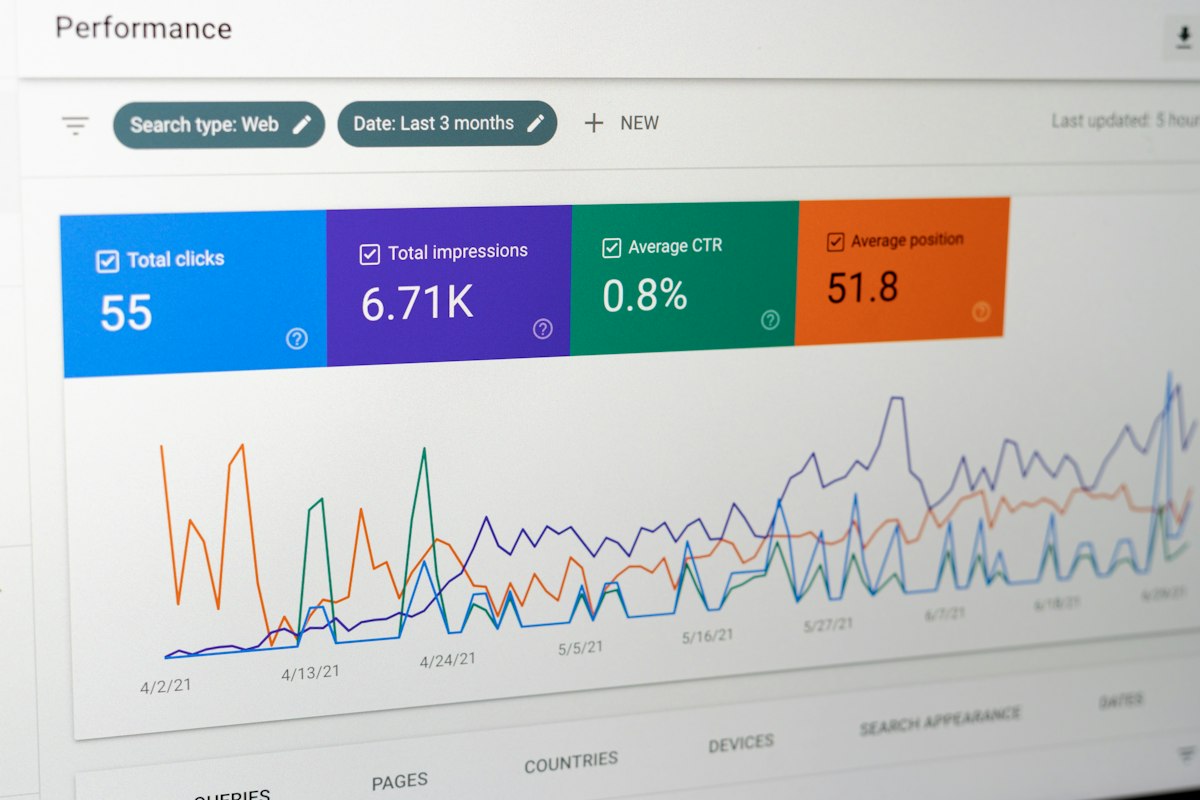
Any agency that builds sites for organic ranking should be able to show you Google Search Console data from a comparable past client, showing impressions and clicks for targeted queries before and after launch. If they cannot, they are either not tracking outcomes or the outcomes are not worth sharing. Both answers matter.
The Question That Separates Architecture-First Agencies From the Rest
Ask the agency: “Walk me through how you would plan the sitemap for a service business targeting three cities and wanting to rank for five service categories.” A genuine SEO-first agency outlines a specific page structure: parent service pages, city-specific landing pages, a blog category for each service area, and the internal linking logic connecting them. An agency with surface-level SEO knowledge gives a general answer about clean pages and keyword research without showing you what the actual structure looks like.
The Mistakes That Prevent a Blog From Generating Organic Traffic
Publishing without a keyword plan. Writing articles on topics you find interesting is not the same as writing articles that match what your target clients are actually searching for. Every post on an SEO-first site targets a specific query with documented search volume and a defined conversion intent. Without this, you publish consistently and rank for almost nothing.
Building the blog on a separate subdomain. A blog hosted at blog.yoursite.com instead of yoursite.com/blog is a separate domain in Google’s eyes. The authority it builds does not transfer to your main site. This architectural mistake costs you every piece of topical authority your content earns and is far too common in sites built without SEO expertise. Creasions builds every blog directly on the primary domain as a structural standard, because the distinction matters immediately from a rankings perspective.
Ignoring internal links. A blog post that earns backlinks and traffic but does not link to any service page is a dead end. It earns authority and then loses it. Every blog post should have at least one intentional link to a relevant service or location page, placed naturally within the content. This is how content earns traffic and also pushes that traffic toward conversion.
Writing for search volume without considering buyer intent. A high-traffic query does not always produce high-value traffic. “What is digital marketing” gets searched thousands of times per month. Almost none of those searchers are ready to hire a marketing agency. A query like “best marketing agency for law firms in Dallas” gets searched far less often. But every person searching it is close to a buying decision. Matching content to buyer intent, not just search volume, is what separates traffic from leads.
The Hidden Cost of a Thin Blog on a Poorly Structured Site
Google evaluates content quality site-wide, not just page by page. If your blog contains twenty thin, poorly targeted articles, that content quality signal drags down the ranking potential of every other page on your domain. This is why publishing bad content is worse than publishing no content. A small amount of high-quality, well-targeted content on a properly architected site will always outperform a large volume of weak content on a structurally compromised one. Build fewer pages and build them right before you build more.
What a SEO-First Build Should Include at Launch and What to Expect in the First Year
An SEO-first website does not deliver organic rankings on day one. It delivers the structural foundation that makes rankings possible and that compounds month over month. Setting realistic expectations prevents you from abandoning a working strategy too early.
At launch, the deliverables from a properly built SEO-first site include a verified sitemap submitted to Google Search Console, all primary service pages indexed with correct meta data, schema markup implemented and tested, Core Web Vitals scores in Google’s “Good” range on mobile, and at least five to ten foundational blog posts targeting high-intent, lower-competition queries in your category.
In months one through three, those early posts begin appearing in Search Console impressions. Expect low click-through rates initially as Google assesses the new site. This is normal. Rankings fluctuate as Google recrawls and evaluates content depth and authority. Keep publishing. Consistency in this period signals to Google that the site is active and growing.
Between months four and nine, rankings for targeted queries begin stabilizing. Service pages in lower-competition markets start appearing on page one. Blog posts targeting long-tail queries generate early traffic. Each piece of content starts building on the authority of what came before it.
By month twelve, a business publishing two to four quality blog posts per month on a properly architected site typically sees measurable organic traffic and a growing number of pages ranking for targeted queries. The sites that reach this result are not exceptional. They simply started with the right structure and maintained the discipline to publish consistently.
Organic rankings are not a marketing expense. They are a capital investment. Every dollar you put into a well-architected site and consistent content creates an asset that appreciates over time. Paid ads create zero asset value. The moment you stop spending, the traffic stops. Build the right infrastructure once and let it work for years.
What to Look for in a Proposal for an SEO-First Website
When you receive a proposal from a web agency claiming to build SEO-first, verify these specifics before you sign anything.
A documented sitemap planning phase. The sitemap must be approved before design begins. It should show URL structure, page hierarchy, and the intended search intent of every page.
Blog architecture specified in the scope. Not “we will include a blog.” Specifically: blog category structure, post templates with heading hierarchy, internal linking conventions, and whether the blog lives on the primary domain.
Schema markup listed as a development deliverable. If schema is not in the scope document, it will not be implemented. Ask which schema types are included and how implementation is verified before launch.
Core Web Vitals targets stated as a commitment. Ask for specific mobile performance score targets. A Lighthouse score above 80 and LCP under 2.5 seconds should be minimum commitments, with PageSpeed Insights verification included in the handoff.
Google Search Console setup included in the handoff. The site must be verified in Search Console, the sitemap submitted, and baseline ranking data established before you take ownership. This gives you the starting point against which all future performance is measured.
An agency willing to put all of these specifics in writing is building to a professional SEO standard. An agency that provides vague statements about “SEO-friendly design” is not.
Frequently Asked Questions
What does it mean to build a website architected for SEO from the start?
A website architected for SEO from the start means that URL structure, content hierarchy, internal linking strategy, blog integration, and schema markup are all planned before development begins, not added afterward. These decisions determine how Google crawls, indexes, and assigns authority to your pages. When made correctly upfront, they allow every piece of content you publish to compound in search authority from day one. When retrofitted after launch, they require structural changes that disrupt existing rankings and delay results by six months or more.
How long does it take to rank on Google through blog content if my site is built correctly?
According to Ahrefs’ research on SEO timelines, most pages targeting competitive queries take two to six months to appear in the top ten positions. Pages targeting lower-competition long-tail queries can rank within 60 to 90 days when the site’s technical foundation is strong. A site built with proper SEO architecture sees its earliest rankings sooner than a site requiring post-launch structural fixes, because Google starts evaluating clean signals from the first crawl rather than encountering technical problems that delay authority accumulation.
Does it matter where the blog is hosted, should it be on my main domain or a subdomain?
Yes, it matters significantly. A blog at yoursite.com/blog builds domain authority on your primary website. A blog at blog.yoursite.com is treated as a separate domain by Google, so the topical authority it earns stays separate and does not benefit your main domain’s rankings. According to Moz’s guidance on subdomain versus subdirectory SEO, hosting content on a subdirectory of the primary domain is consistently the stronger approach for building organic search authority. Any agency recommending a subdomain blog without a compelling technical reason is making an architecture decision that will cost you authority over time.
What is topical authority and why does it matter for ranking?
Topical authority is Google’s assessment of how comprehensively a website covers a subject area. A site with fifteen well-structured articles about roofing, each covering a distinct aspect of the topic with appropriate depth, signals to Google that it is a genuine authority on roofing. That signal increases the ranking potential of every page on the site, including service pages targeting commercial queries. Sites with thin content or scattered topics signal low expertise and consistently rank below sites with demonstrated topical focus, even when other factors are comparable.
Can I add SEO to a website that was already built without it?
You can improve a poorly architected site’s SEO performance, but the extent of improvement is limited by the structural decisions baked into the original build. URL structure changes require comprehensive redirect mapping and often disrupt existing rankings temporarily. A blog added to a site that was not built with content architecture in mind will not benefit from the internal linking and topical clustering that makes blogs effective ranking tools. Post-launch SEO can move the needle, but it rarely produces the same results as a site built correctly from the start. If the existing site has significant structural problems, a rebuild is often more cost-effective than extended corrective SEO work.
How many blog posts do I need to publish before I start seeing organic traffic?
There is no universal threshold, but HubSpot’s marketing research found that companies with more than 52 blog posts see a 77% increase in median monthly leads compared to those with fewer. More importantly than volume, targeting the right queries matters more than hitting a post count. Ten posts targeting specific, search-intent-matched queries will consistently outperform fifty posts written without keyword research. Publish consistently, target specific questions your potential clients are actually searching for, and link every post to relevant service pages. The traffic accumulates over months, not weeks.
What is the difference between an SEO-friendly website and an SEO-architected website?
An SEO-friendly website avoids obvious technical mistakes: it loads reasonably fast, uses proper heading tags, and has readable URLs. An SEO-architected website is built with a deliberate structural plan: a content hierarchy that signals topical expertise, a URL taxonomy that communicates page relationships to Google, an internal linking system that distributes authority strategically, and a blog integrated into the site’s authority structure rather than sitting in isolation. SEO-friendly is a baseline. SEO-architected is the foundation that makes organic traffic growth predictable and sustainable. Most agencies build friendly. Few build architected.
Should I hire the same agency to build my website and manage ongoing content, or separate vendors?
For SEO and content to work together effectively, the same team needs to understand both the site’s architecture and the content strategy. If your web agency builds the site and a separate team writes the content, coordination gaps emerge: content gets published without the internal linking structure it needs, new pages appear in URL formats inconsistent with the existing architecture, and performance problems surface without a single accountable team to diagnose and fix them. A single agency managing both the technical architecture and the content strategy produces better compounding results because every new piece of content is built to fit the system, not added to it from the outside.
Ready to Build a Website That Earns Organic Traffic Instead of Buying It?
Creasions builds SEO-architected websites for small and mid-sized businesses across Dallas and beyond, with blog structure, URL taxonomy, schema markup, and internal linking planned from the brief phase, not added after launch. If you are tired of paying for ads that stop working when you stop spending, we offer site architecture review that shows you exactly what your current site is missing structurally and what a properly built replacement would look like. No vague SEO promises. Just a clear picture of the structure your site needs to rank.